From Anxious to Empowered: How Smart Life Assistants Gave Me Back My Peace of Mind
Living in a world where we’re constantly juggling work, family, and personal time, it’s easy to feel overwhelmed — especially when it comes to keeping our homes and loved ones safe. I used to lie awake wondering if I’d locked the door or turned off the stove. But everything changed when I truly embraced a smart life assistant not as a gadget, but as a quiet guardian woven into my daily rhythm. It didn’t just automate tasks — it restored my sense of calm, one small, thoughtful alert at a time. That shift from constant worry to quiet confidence? It wasn’t magic. It was technology working gently, wisely, and humanely in the background of my life.
The Moment I Realized My Home Wasn’t as Safe as I Thought
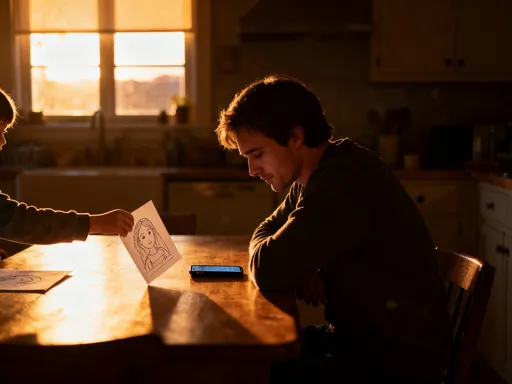
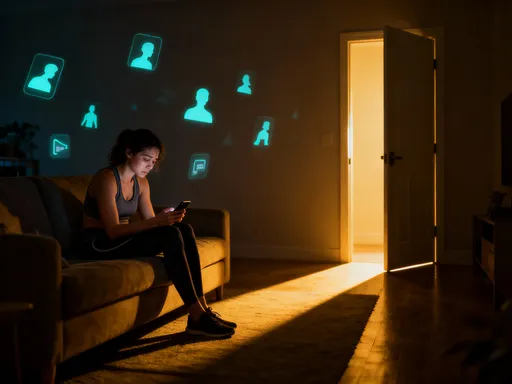
It was 11:30 p.m. on a rainy Tuesday. I’d just tucked the kids into bed, finished a work call, and was about to climb into bed myself when a thought hit me like a cold splash of water: Did I lock the front door after coming home from the gym? I couldn’t remember. I retraced my steps in my mind — gym bag on the floor, quick shower, helping my daughter with homework — but the moment of locking the door was blank. My heart started racing. Was the house really secure? I grabbed my phone, debated going downstairs, then remembered the deadbolt was sticky — what if I opened it and couldn’t close it again quietly? I didn’t want to wake anyone. So I lay there, eyes wide open, imagining every possible scenario: a shadow at the window, a creak on the stairs, someone walking right into our living room. That night, I didn’t sleep more than two hours.
And honestly? That wasn’t the first time. Over the months, these little moments piled up. Did I turn off the oven after baking cookies? Was the garage door closed after my husband came home late? Was the back slider latched after the dog went out? The irony wasn’t lost on me — I worked hard to create a safe, warm home, yet I was living in a low hum of anxiety. I wanted to feel in control, but instead, I felt scattered, second-guessing myself constantly. That rainy night was the breaking point. I realized I wasn’t just forgetting things — I was carrying the emotional weight of uncertainty every single day. I started asking myself: what if there was a way to know for sure, without having to check everything myself? What if technology could act as a second set of eyes — not to replace my role as a caregiver, but to support it?
That’s when I began looking into smart life assistants. Not for flashy features or voice-controlled music playlists, but for peace of mind. I didn’t want something complicated or coldly technical. I wanted something that could quietly watch over the house, help me breathe easier, and let me focus on being present with my family. And what I discovered surprised me — it wasn’t about turning my home into a sci-fi movie set. It was about weaving gentle, intelligent support into the rhythms of daily life.
Meeting My Smart Life Assistant: More Than Just Voice Commands
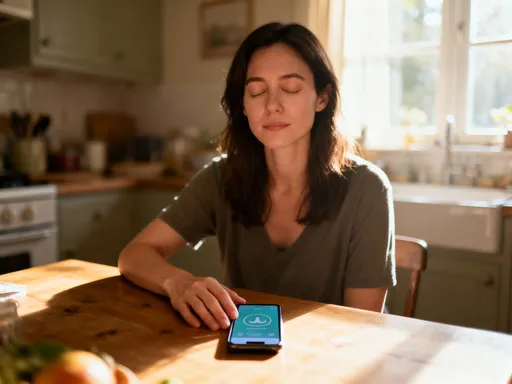
I’ll admit, I was skeptical at first. When I unboxed my smart life assistant, I pictured something that would play the morning news or remind me to buy milk. That’s what I’d seen in ads — fun, but not life-changing. I set it up in the kitchen, connected it to my Wi-Fi, and tested it with a few basic commands. 'What’s the weather?' 'Set a timer for 20 minutes.' All helpful, sure, but nothing that eased the knot of worry in my chest. I almost wrote it off as another gadget that looked good on the counter but didn’t really help.
Then, one afternoon, I was halfway through grocery shopping when my phone buzzed. A notification popped up: 'Back door is open.' I froze in the cereal aisle. The kids had come home from school, and one of them must have gone outside to play and forgotten to close the sliding glass door. It was a small thing — but in that moment, it felt huge. I could have come home to an open house, possibly letting in bugs, rain, or worse — an uninvited guest. Instead, I got a quiet alert. I called my daughter, she closed the door, and I breathed again. That tiny moment changed everything. This wasn’t just a speaker with a voice. It was a partner in keeping our home safe.
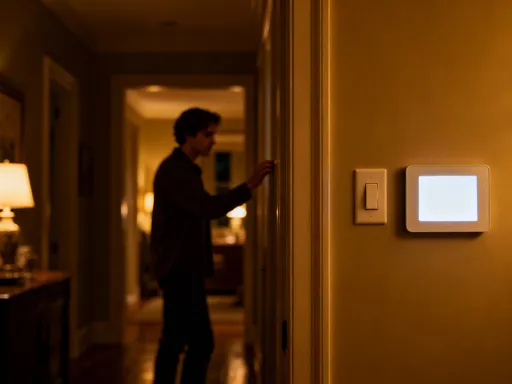
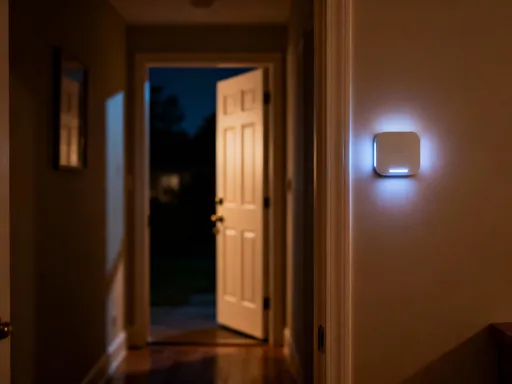
From then on, I started exploring what else it could do. I linked it to smart locks, so I could check the front door from my phone. I added motion sensors in the hallway and garage. I set up routines so that when I said, 'Goodnight,' the lights turned off, the thermostat adjusted, and the doors locked automatically. Each feature wasn’t about convenience alone — it was about reducing the mental load. I wasn’t just saving time; I was saving energy. The constant background loop of 'Did I…?' started to fade. And the best part? I didn’t have to do anything dramatic. No rewiring the house or learning complex codes. Just small, thoughtful steps that added up to real peace of mind.
Security That Works While You’re Asleep (or at Work)
One of the most powerful things about a smart life assistant is that it never clocks out. It’s there at 6 a.m. when the house is still dark, at 3 p.m. when I’m in a meeting, and at 10 p.m. when everyone’s asleep. I used to think security meant strong locks and maybe a motion-sensor light. Now I see it differently — security is awareness. It’s knowing what’s happening, even when you’re not there to see it.
Take last winter, for example. I was at work, deep in a project, when my phone buzzed with a quiet alert: 'Garage door opened at 6:12 a.m.' My stomach dropped. That was hours ago — who opened it? Was it left open all day? I pulled up the live camera feed from my phone. There was my teenage son, shivering in his hoodie, trying to sneak out for school without waking anyone. He’d forgotten to close it behind him. I smiled, but I also felt relief. Without that alert, the door could have stayed open for hours — letting in cold air, wasting energy, or worse, giving someone access. But the system caught it. No siren, no panic, just a gentle nudge that let me take action.
That’s the beauty of passive security. It’s not about loud alarms or dramatic interventions. It’s about quiet, consistent monitoring that supports your attention, not replaces it. Motion sensors detect unusual activity. Door and window sensors report openings. Temperature sensors alert you if the heat drops too low in winter — a real worry when you have elderly parents or pets at home. And the best part? You don’t have to monitor it constantly. The system does the watching, and only reaches out when something matters. It’s like having a trusted neighbor who quietly taps you on the shoulder instead of shouting across the street.
I’ve also set up geofencing, which uses my phone’s location to know when I’m near home. When I’m driving back from errands, the lights turn on automatically, the thermostat adjusts, and I get a summary: 'Front door locked. Garage closed. No motion detected.' It’s not just convenient — it’s emotionally comforting. I don’t have to wonder what state the house is in. I arrive knowing it’s secure, warm, and waiting for me.
When the Unexpected Happens: A Real Test of Trust
There’s a difference between liking a technology and truly trusting it. For me, that trust wasn’t built through specs or sales pitches — it was built in a single, tense moment last spring. I was at my sister’s birthday lunch when my phone buzzed with a motion alert from the front porch. I opened the app and saw a delivery person drop off a package — normal enough. But then, a minute later, someone else walked up. Not a neighbor. Not a friend. A stranger, lingering near the steps, looking around. My heart sank. Was he going to take the package? Was he checking if anyone was home?
I watched through the camera feed, frozen. I didn’t want to overreact, but I couldn’t ignore it. I used the two-way audio feature to say, 'Hello, can I help you?' He startled, looked around, then left quickly. I immediately called a neighbor who was home and asked her to keep an eye on things. Within minutes, the house felt safe again. But the emotional impact lasted longer. I realized how vulnerable I’d felt before — helpless, disconnected, unsure. And now? I had tools. I had eyes. I had a voice, even when I wasn’t there.
That incident changed how I saw my smart life assistant. It wasn’t just a convenience tool or a minor upgrade. It was a layer of protection that gave me agency. I wasn’t stuck waiting for something bad to happen. I could see, respond, and act — all from my phone, across town. And the fact that it happened during a normal, ordinary day made it even more powerful. This wasn’t a rare emergency. This was real life. And my system was ready.
Since then, I’ve had other small alerts — a raccoon near the trash cans, a tree branch brushing against a window in the wind — but none made me question whether the system was worth it. Because the value isn’t just in stopping crime. It’s in reducing fear. It’s in knowing you’re not alone in protecting your home. That day on the porch didn’t just test the technology — it tested me. And I passed, because I had support.
Custom Safety for Every Member of the Household
One of the things I love most about my smart life assistant is how it adapts to different people in the house. It’s not one-size-fits-all. For my teenage daughter, it sends me an alert when she gets home from school — not because I don’t trust her, but because I worry. Is she safe? Did she get caught in the rain? The arrival notification lets me text her a quick 'Welcome home' without sounding like I’m interrogating her.
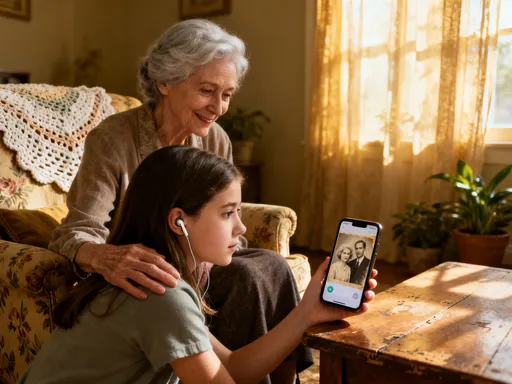
For my aging mother, who lives with us part-time, I’ve set up a gentle routine. At 9 p.m., the hallway light turns on, and a soft voice says, 'Time to wind down, Mom.' It’s not pushy — just a reminder. And if there’s no motion in her room by 10:30, I get a quiet alert, so I can check in. It’s not about surveillance. It’s about care. I don’t want to hover, but I do want to know she’s okay.
During winter, temperature monitoring became a game-changer. One icy morning, I got an alert that the basement had dropped below 50 degrees. The furnace had shut off overnight. Without that warning, we could have faced frozen pipes — a disaster waiting to happen. I called the maintenance team, got it fixed, and avoided thousands in damage. Again, it wasn’t flashy. Just timely, thoughtful awareness.
And for my husband? He loves the automatic lighting. When he comes home late, the path from the garage to the kitchen lights up, so he doesn’t fumble in the dark. It’s a small thing, but it means he doesn’t trip, and I don’t wake up startled. These personalized touches don’t just make life easier — they make it kinder. The technology learns our rhythms and supports them, not the other way around.
Privacy Without Paranoia: Keeping the Assistant Trusted, Not Intrusive
I won’t pretend privacy wasn’t a concern. When I first set up the assistant, I wondered: Is it always listening? Who has access to our conversations? What if someone hacks into our cameras? These aren’t silly fears — they’re real, valid questions. But here’s what I learned: privacy isn’t about rejecting technology. It’s about using it wisely.
I started with small boundaries. I turned off the microphone when we were having private conversations. I chose devices that offer local storage, so video footage stays in our home, not on a cloud server. I enabled two-factor authentication and strong passwords. I reviewed the privacy settings monthly, just like I’d check the batteries in a smoke detector. These habits didn’t make the system less useful — they made me more confident in using it.
I also talked to my family about it. We agreed on rules: no cameras in bedrooms or bathrooms, and we respect each other’s space. The assistant isn’t a spy — it’s a helper. And when everyone understands that, it stops feeling intrusive and starts feeling supportive. I even showed my daughter how to mute the device herself. Empowerment, not fear, is the goal.
True security includes digital safety. Just like we lock our doors, we need to protect our data. But that doesn’t mean we have to live in fear of our own devices. With a few smart choices, I’ve built a system that feels trustworthy — not because it’s perfect, but because I’m in control. And that control? That’s the real peace of mind.
Living Lighter: How Less Worry Created More Space for Joy
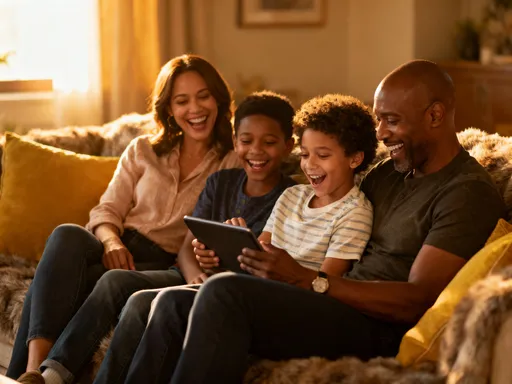
Looking back, the biggest change hasn’t been in my home — it’s been in my mind. Before, my mental energy was spent on tracking, checking, and worrying. Now, that space is free. I use it to read to my kids without glancing at the clock. I cook dinner while actually enjoying the process, not rushing to double-check the stove. I fall asleep faster, wake up calmer, and laugh more. The small fears that used to whisper in the background have quieted down.
My smart life assistant didn’t eliminate risk — nothing can. But it gave me something better: confidence. I know my home is watched. I know my family is accounted for. I know I can respond if something’s wrong. And on the days when nothing happens — which is most days — that’s the victory. Because peace isn’t the absence of danger. It’s the presence of trust.
I used to think being a good homemaker meant doing everything myself. Now I see that it means creating a home where everyone feels safe, supported, and free to be themselves. Technology didn’t replace my role — it expanded it. I’m not less involved. I’m more present. I’m not relying on gadgets. I’m using tools to love my family better.
So if you’re standing where I once stood — tired, anxious, carrying the weight of 'what ifs' — I want you to know: it doesn’t have to be this hard. You don’t have to choose between safety and simplicity. Between care and calm. A smart life assistant isn’t a replacement for you. It’s a quiet ally, working beside you, so you can breathe deeper, sleep easier, and live more fully. And honestly? That’s the most high-tech feeling of all.